Monday, September 07, 2009

Fleet feet

Irish dancer

I don't know too much about my father's ancestry. I do know that the name "Jordan" has origins in the UK, and that when I was young, I saw a lot of people with red hair and freckles at our family get-togethers. So I will go on the presumption that there is some smattering of Scotch or Irish ancestry in my blood.

That may explain my affinity for all things Celtic. Over the Labor Day weekend, my wife and I dropped in on the Irish Days celebration in Long Grove, Illinois. We took in some music, storytellers and dancers.

Irish dancer

As far as I can tell, to be good at Irish step dancing, you need to keep your upper body nearly stationary while utilizing the universal joints in your ankles and knees to twist, kick and bend your lower extremities at impossible angles and at lightning speed. An ability to levitate is also helpful.

Irish dancer

Oh, and to do everything while maintaining a bright smile on your face the entire time counts for bonus points.

Irish dancers

A number of local Irish Dance studios stepped up and performed on a stage decked with a large flag of Ireland for a large crowd of appreciative folks who all claimed Irish ancestry, at least for a couple of days.

Irish dance triptych

The challenge in photographing Irish dancing is to freeze the action while catching the steps at the peak of their action. Easier said than done. After watching a few dances (and just missing with dozens of shots), I got pretty good at anticipating when certains steps were coming up. I also shot several sequences where I simply tripped the shutter in time to the music, since the dance moves would coincide with the beat. Even so, several hundred exposures yielded just a handful of keepers.

Irish dancers

There's another Irish Fest coming up this weekend in a nearby suburb. Maybe I'll try again to see if my right index finger can keep up with flying feet.

And I found this video that helps explain things a little:


Photographs © 2009 James Jordan.

Friday, September 04, 2009

Know when to ditch "Plan A"

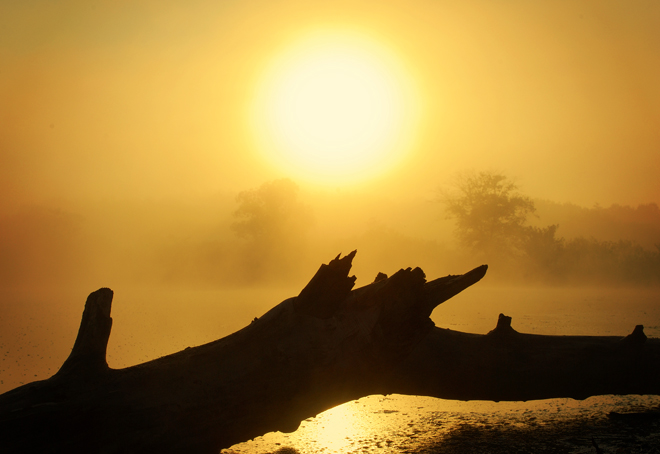
Misty dawn 2

I usually head into a photo session with a preconceived notion of what it is I want to capture. Nothing wrong with that. It's actually helpful as a starting point. The trick is to recognize when that plan is just no longer working for you, and as much as you are emotionally attached to that plan, to dump it in the rubbish bin. Otherwise Plan A becomes a dead weight around your neck, creatively speaking.

I stopped by the Bode Forest Preserve in Streamwood, Illinois this morning. Layers of fog lay draped over the trees and I wanted to capture bursts of sunlight streaming from between the branches. It looked oh, so pretty in my mind's eye. Reality, however, was not nearly so cooperative. It just wasn't happening the way I envisioned it.

So did I ditch Plan A to explore the other visual opportunities that lay before me? Of course not. I stubbornly tried to make the landscape bend to my will, wasting a lot of time and memory card space in the process.

I gave up and headed back to my car, passing a clearing that opened to Bode Lake. I stopped for a second, looked at the mist on the water and thought, It probably won't do any good, but I may as well look as long as I'm here. Not much of a Plan B, but there it was. I walked through the clearing.

Can't say the view was particularly spectacular, but I took a few shots using a fallen tree branch as the foreground interest, then decided to go for some "worm's eye" shots holding the camera an inch or so off the ground, pointing it in the general direction of the branch and seeing what would happen. What happened were some very simple abstract images that appealed to my Asian sensibilities. I varied the focal length between shots, and voila!

Misty dawn 1

I meant to do that, yup. Yessir, that's the ticket.

(Side note: I was in Quebec a few years ago, and at my first meal in a restaurant there, the server brought my food and said, "Voila!" It made me laugh because it sounded corny. Then I realized those folks meant it up there.)

Photographs © 2009 James Jordan.

Gettin' some publication love ...

Got two photographs appearing in magazines this month, but you'll have to operate in specific niches in order to see them. The Mortice and Tenon is an architectural mag published in the UK. The magazine features an article on barn restoration in the Midwestern U.S. My photograph of an 1840s vintage barn made the cover.

Communication Director is self-described as a mag that follows "the intersection of politics, media and communication." It is published in Germany. My photo of the Roosevelt University Symphony Orchestra and Concert Choir getting ready to rock out some Wagner accompanies the opening page of an article about "orchestrating" communication strategy.
More submissions coming up later this month. Hopefully more publication love to report on later.

Thursday, September 03, 2009

Today's sunrise ...

Sunrise in Sleepy Hollow

... as seen from Sleepy Hollow, Illinois. Yes, there really is a Sleepy Hollow. It's located in Chicago's northwest suburbs. The town is a blend of three-quarter-million-dollar homes and large expanses of open space. If you skip the mansions and stick to the open areas, you can see some very nice views of nature.

"But yesterday you said you were starting a series of insect macro photographs to clear out your backlog of bug pictures." Yes, I did. And I'll hop right back on that tomorrow.

Unless, of course, today's sunset looks promising.

Photograph © 2009 James Jordan.

Wednesday, September 02, 2009

Shy hopper

Shy hopper

Now that we've made the turn into September, it will only be a matter of a couple of months before we say goodbye to our exoskeletoned friends. So I thought I'd close out a summer's worth of insect macro photography (and get to a backlog of archived photos) by posting some of my favorites.

It took a while to get a photo of this guy. Grasshoppers like to split whenever something large, like, say, a photographer with a large camera, lens and flash setup strolls through the meadow. Mr. Hopper hid from me behind a blade of grass. As I moved into position, he would peek at me and move back behind the blade.

After a few rounds of peek-a-boo, he showed his entire face to me and I got the shot. What I love about it, besides the even lighting on Mr. Hopper and the focus on his face and foreleg, is what appears to be sunlight falling on the blade of grass. It's not. It's the flash. The blade of grass was angled in such a way as to catch the light from the flash on both sides. The shadow of Mr. Hopper is actually on the other side of the blade -- being somewhat translucent, you can see the shadow.

I also got the anntenae in fairly sharp focus. I've found that one of the bugaboos of insect photography is that you tend to lose one of the anntenae no matter what you do. Depending on the angle from which you are shooting, it will appear as a blurry line across the head or body of the insect. I hate that.

It's always nice when everything comes together just right.

Photograph © 2009 James Jordan.

Tuesday, September 01, 2009

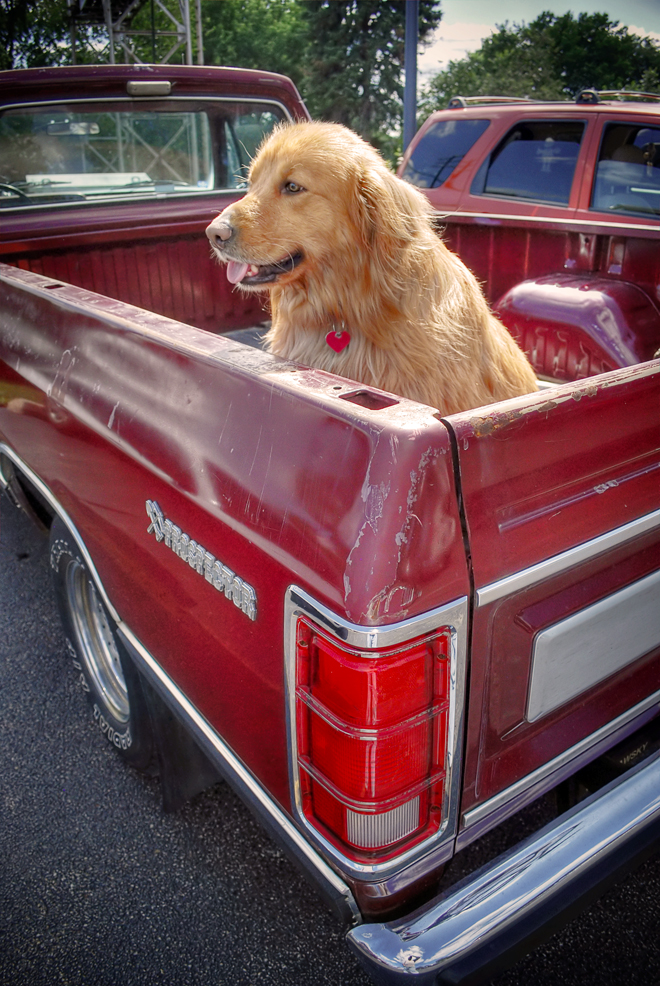
Dog in truck

Dog in truck

I was riding down the road with a couple of friends back about 25 years ago. One of them shouted, "Look up ahead! There's a dog with a truck under it!" The other looked around in panic. "Oh, no! Where?" It took him a second to realize, once he spotted the pickup truck with the dog sitting in the bed, that he'd been had.

Since then, I replay that scene in my head whenever I see a dog sitting in a pickup truck. And if I happen to have a camera when I see one, I take its picture.

This one was in the parking lot of the Railroad Park in Rochelle, Illinois. Master had come to the park to watch the trains roll through town (Rochelle averages 80-120 trains a day). The dog by default also came to watch the trains. And the squrrels. And the birds. And whatever it is that catches a dog's attention every few seconds.

Photograph © 2009 James Jordan.

Monday, August 31, 2009

Watching the trains go by

Watching them roll

Rochelle, Illinois is a town that sees a lot of trains roll through each day. A lot. Like 80-120 trains. That's a train about every 15 minutes or so. The town became a hub for hardcore railfans and casual observers, so the town built a park where trunk lines for the Burlington Northern Santa Fe and Union Pacific railroads cross.

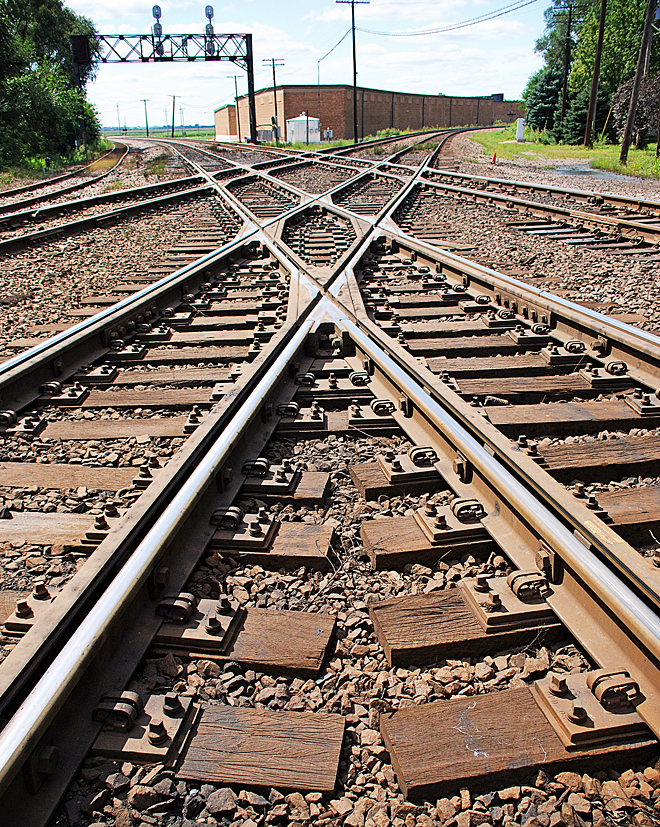
Diamond

The Railroad Park features a pavilion on a raised area between the two sets of tracks for ease of viewing in all directions. Radio transmissions from nearby traffic controllers are broadcast in the pavilion and on FM radio 106.9. The park office/souvenir shop features a CRT monitor that tracks the movement of trains across the region. There is a picnic area and benches situated throughout the park.

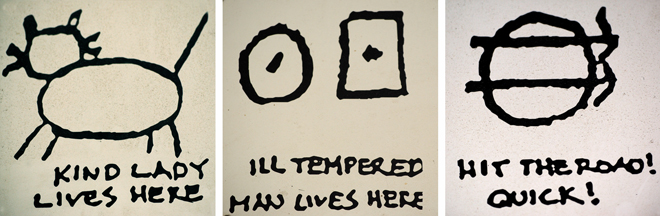
A display near the pavilion celebrates the life of the hobo, the traveler who hopped trains in search of work, handouts and a better life. Signs in the pavilion display samples of the hobo code -- symbols that gave wandering souls a warning as to what to expect in any given town.

Hobo Code

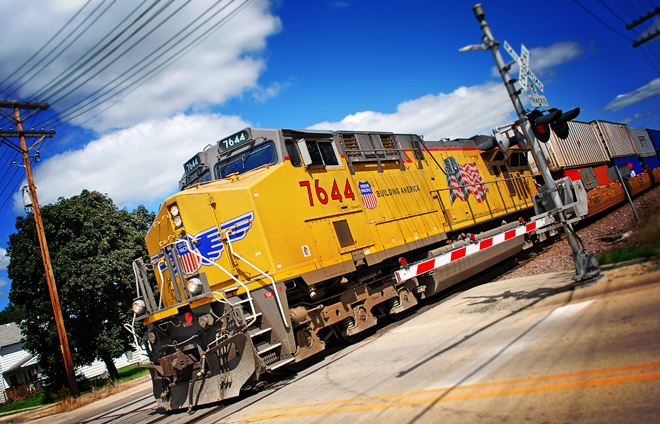
Union Pacific 7644 rolls into town.

UP 7644 rolls into town

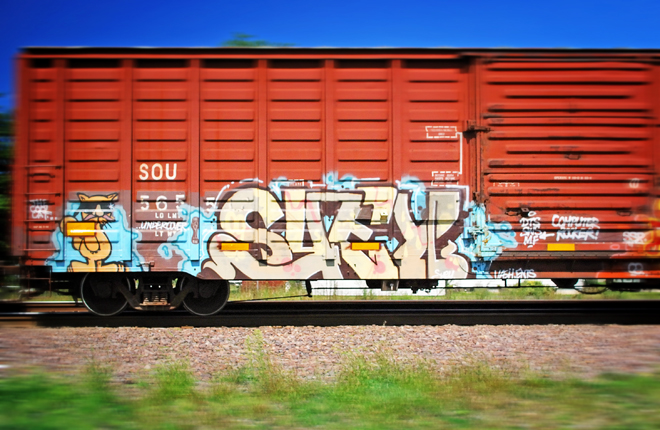
Some pretty snazzy graffiti also comes through.

Painted box

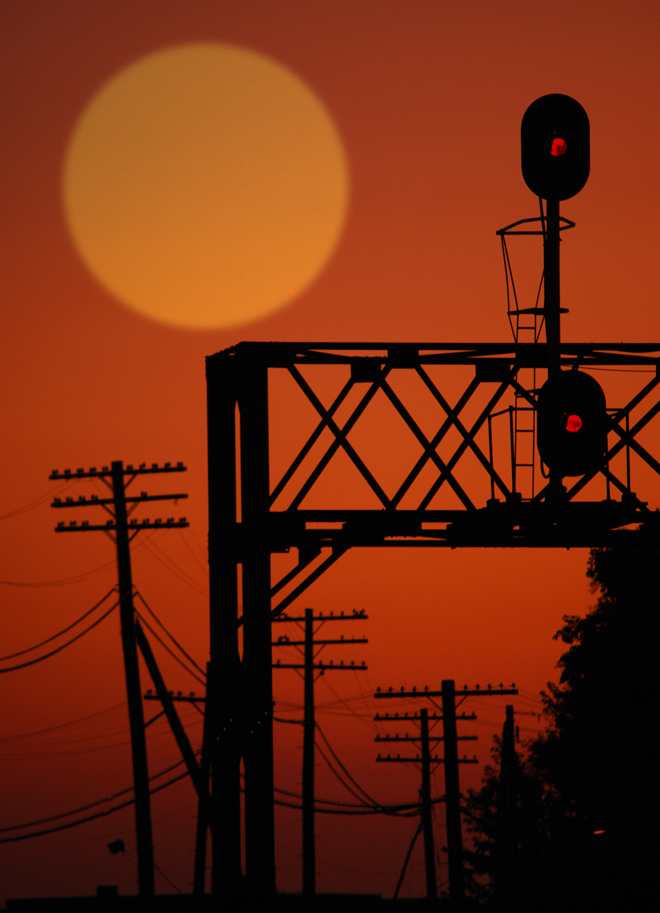
And what's better than watching the day fade over a railroad?

Along the line

Visit the Railroad Park Web site for more info. More on Wikipedia and Facebook.

Photographs © 2009 James Jordan.

Friday, August 28, 2009

Out from the misty sea

Out from the misty sea

A shot like this one would have driven me nuts back in the days when I shot film. Fussing over the exposure, taking shots at a full range of shutter speeds hoping to capture the effect I was after, waiting for the film to be developed, then either celebrating or agonizing over the results.

Digital photography made this a breeze. Place a stack of neutral density filters over the lens to slow down the exposure and turn crashing waves to a dreamy mist. Set camera to aperture priority and dial down to f/32 for maximum depth of field. Meter on the rocks in the distance, click. Check and evaluate. Adjust. Click. Repeat as needed.

This is the beach at Wind Point, a few miles north of Racine, Wisconsin. Two-foot waves were breaking just offshore. An exposure time of ten to thirty seconds turned the breakers into misty clouds on the rocks in the middle of the photo. A hunk of driftwood was brought into the picture to complete the composition. I mean, I just happened upon this unique alignment of driftwood and rocks and thought I'd photograph it. Yeah, that's it ... that's the ticket.

Wink, wink.

Happy Friday.

Photograph © 2009 James Jordan.

Thursday, August 27, 2009

Oh, the changes I've seen

Shock and awe

I was in sixth grade when the conversation turned one day to the turn of the next century, which was still another 31 years away. Doing the math in my head, I calculated that I would be 42 years old when that happened. I couldn’t even imagine being that old at the time. I can barely remember ever being that young now.

The first video game I ever played was the first video game to be mass marketed – Pong. You remember it, don’t you? Big old electronic box that had to be hard wired to a television just so you could break bricks with a bouncing ball? I now play a version of that game on my cell phone when I’m not connected to people halfway around the world via the internet.

I rode my bicycle without a helmet on my head, didn’t ride in a car with seat belts until I was seven, owned toys that had small removable parts, slept in a room decorated with lead-based paint and even played with a chunk of asbestos that my parents bought me as a gift. Medicine bottles didn’t have childproof caps, and drug commercials didn’t list the devastating side effects that could occur while using their product. It’s a wonder any of us survived to see the turn of the century at all.

My cell phone has more computing power than the computers that helped send men to the moon, which I watched in my living room on a muggy July evening in 1969 in a non air-conditioned house on a television set that only got four channels that could be changed only by physically getting up and turning a dial.

I had to wait about a week and a half for pictures taken on an Agfa 35mm camera to come back – in stunning black and white. Photo labs eventually got the wait time down to two or three days, then 24 hours, then an hour until they were trumped by digital cameras, where the wait time to see a photo is now an agonizing three-quarters of a second.

Yup, we’re living in amazing times, we are. It’s a concept that Brad Paisley has captured so well in his recent song, Welcome to the Future:

Look around it’s all so clear,
Wherever we were going,
Well, we’re here.

See the video here.

Well, gotta go. I’m sitting in the parking lot of a cheap motel, glomming off their wireless internet while writing this on my laptop computer while waiting for an appointment down the street.

Something else I could never have imagined in sixth grade.

Photograph: Self portrait taken while testing out a two-flash off camera setup, with wireless connectivity, which is amazing in itself. © 2009 James Jordan.

Wednesday, August 26, 2009

Black beauty

Classic

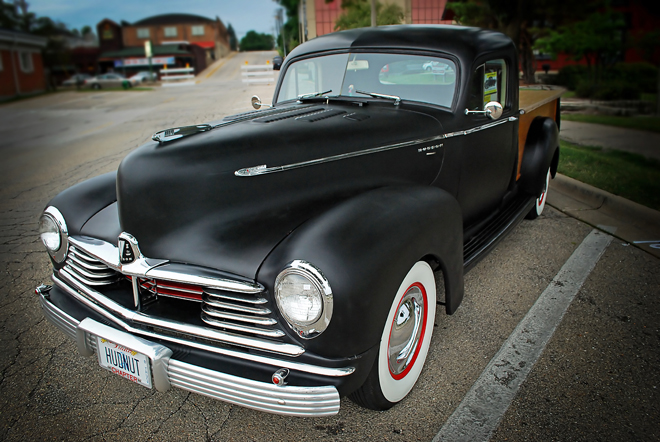
Batavia, Illinois holds a classic car cruise night on Friday evenings throughout the summer. As far as I know, most of them have been rained out this year. I headed down while threatening clouds hung overhead a couple of week ago to see if any hardy souls would show up with their cars. A few did.

One who did was the owner of this Hudson pickup truck. What was interesting about this vehicle, besides the ultra-cool white-and-red sidewall tires, was the black satin finish -- which, under the overcast sky, really brought out the lines and shapes of the body. The satin finish also helps the chrome accents to pop.

The barriers in the distance were intended to close off a street filled with classic automobiles. For this evening, they only would have needed to close six parking spaces.

This Friday's forecast? Showers.

Photo sightings: Last summer, I shot some sunset photos in Door County, Wisconsin. As a joke, I blacked out the solar disk in one of the pictures and posted it here as the first photograph of a solar eclipse that occurred later in the year. Yesterday the photo apeared on the blog of the Houston Museum of Natural Science to accompany a story on the recent eclipse in Southeast Asia. They picked the photo up from Flickr, where I identified Photoshop as the culprit.

Photograph © 2009 James Jordan.

Tuesday, August 25, 2009

An old friend

Wind Point Lighthouse

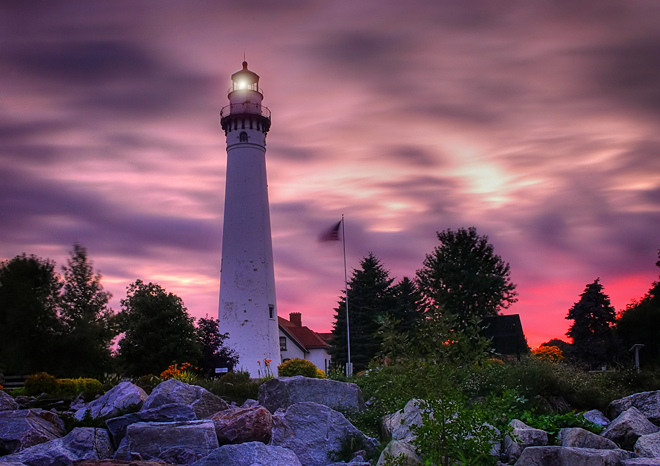
When I first picked up a camera to begin the task of seriously improving my photography back in 1997, one of my first subjects was the lighthouse at Wind Point, just north of Racine, Wisconsin. I've lost count of the number of times I've returned. I can't recall ever having been disappointed with any of my sessions there.

On a recent visit, my wife and I arrived at sunset as a half dozen windsurfers were packing up and heading home. Brisk winds kicked up some rather large waves on Lake Michigan that day. As the sun descended past a bank of clouds, I was hoping that the sky would burst into a sea of flaming red, but what you see above is as far as things developed. Oh, well. A stack of neutral density filters helped me get a nice long exposure of 20 seconds or so to catch the movement of the clouds behind the lighthouse.

Since I first laid eyes on them 12 years ago, the lighthouse and grounds have undergone several makeovers, most of them to my liking.

Then again, so have I.

UPDATE: This photo was selected as Photo of the Day at the Karma group on Flickr and posted to the Karma POTD blog. Thanks!

Photograph © 2009 James Jordan.

Monday, August 24, 2009

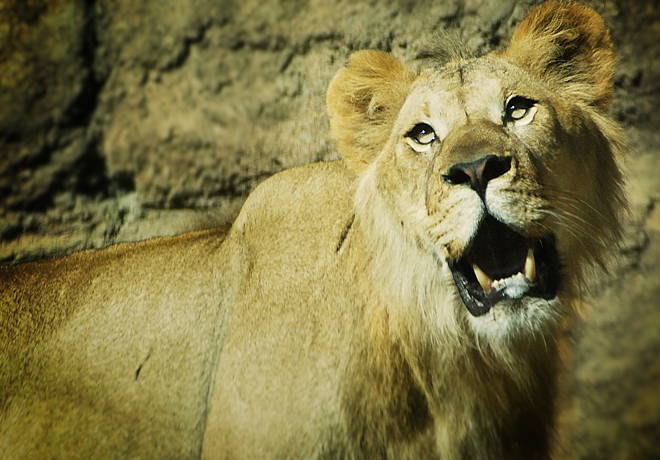
Borrrrrn Freeeeee!

Borrrrrrn Freeeee!

Karaoke cat sings his theme song.

A zoo is not the ideal place for animal photography. Of course, given the cost of a safari to Africa, they're the next best alternative for me.

Most zoos are designed for the living space of the creatures (at least the newer or recently refurbished ones are). The best ones integrate an "up close and personal" viewing experience. But even those don't seem to take into account the needs of photography. Glass with all manner of glare and reflections, wire mesh barriers, and living areas that, while they provide lots of room for the inhabitants, also increase the distance from the camera, making life challenging for a photographer.

Here are some tips on how I do things at the zoo.

Zoom, baby. At a minimum, I have a 200mm lens on at all times. I also use a 2x teleconverter to double the zoom. The tradeoff -- an exposure that's slow as molasses. The teleconverter takes away a stop of light from an already sluggish lens. This lion was shot at ISO 800 at an exposure of 1/1250 at a "wide open" effective f-stop of f8. This was OK for animals in the early morning sunlight. Animals in the shadows, not so much. The benefits -- you can get some great "in your face" shots that help disguise the fact that you were shooting in an artificial environment. You also can shoot right through mesh barriers without them registering in your shot. Just be sure you're shooting through an area of mesh that is not in direct sunlight. You also have a better chance of avoiding reflections when shooting through glass.

Patience is a virtue. Zoo animals have all the time in the world. You necessarily don't. But spend some time watching the critters. You might pick up a pattern of movement that you can use to your advantage. I watched a pair of lions pacing and positioned myself to catch them as they made their turns. I caught the young male above as he turned his head, making him apear as if he might be roaring or at least belting out his favorite song.

I also observe the rule of shooting early or late in the day. If I have to be there in the middle of the day, I'll try to catch animals in shady areas to avoid harsh shadows and the bluish light of the midday sun. I'll also change my white balance to "flash" or "cloudy" to warm up the tones in my shots.

Got your own zoo tips? Successes? Failures? Let me know.

Photograph © 2009 James Jordan.

Friday, August 21, 2009

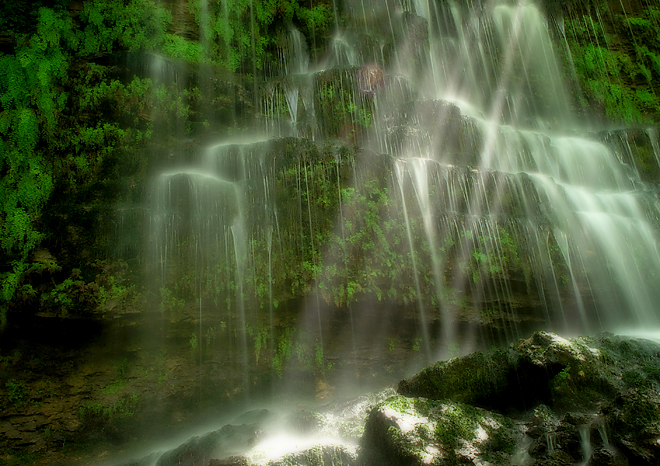
Liquid light

Liquid light

Visitors to Tennessee's Rock Island State Park rave about its natural beauty, especially a series of cascades which tumble down the face of Great Falls Gorge into the Caney Fork River. In actuality, the falls at Rock Island are man made. When the Tennessee Valley Authority built a dam and power station on the Caney Fork River at Rock Island, the Collins River, adjacent to Caney Fork, rose and began to pour over the north face of Great Falls Gorge. Hey, but I'll take 'em.

This shot was taken at the bottom of a trail that leads from a parking area to the base of the gorge. It's a minor cascade, but I was taken by the lush green vegetation and the shafts of sunlight filtering through the trees.

I began a trek to the Great Falls, the largest waterfall in the park, located a half mile up the gorge, which was within sight the entire time. However, the challenging rocky terrain in the open sun and hundred-degree-plus heat index made me reconsider and retreat back to a cooler location. Several vultures circling overhead added to the ominous atmosphere. Aparently one visitor to the park fell victim to heat exhaustion that day while trekking to the falls and an ambulance was called in.

I guess Great Falls will have to wait.

Photograph © 2009 James Jordan.

Thursday, August 20, 2009

Thoughts on being wanted

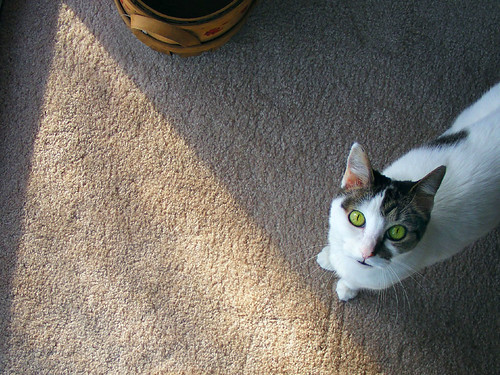
An exercise in the division of a two-dimensional plane (with a curious onlooker)

One day my wife and I noticed that our cat, pictured above, who had always been the picture of health, was limping on her hind legs. Within two days, she was completely paralyzed from the waist down.

We rushed her to our vet, who told me after an examination, in very grave tones, that the left side of her heart had enlarged, which allowed blood to pool and form clots. These clots would occasionally escape the heart and lodge in her legs, causing paralysis, and that the condition was nearly always fatal, since the clots would eventually reach and shut down vital organs. The vet gave me a bottle of medicine, designed to enlarge her blood vessels and dissolve the clots, told me how to administer it and told me not to be surprised if the cat did not survive the trip back home. That was nearly two years ago.

In April of 2008, I posted on this blog about her medical issues and wrote that there would come a day when her condition would overcome any benefit the medicine would provide. That day came last week when a series of clots shut down her legs and eventually her lungs. She now lies buried under the shade of an oak tree in our back yard.

The cat showed up on our doorstep as a stray one winter about ten years ago after someone dumped her in our neighborhood. She was cold, hungry and injured. We took her in, had her fixed up (in more ways than one) and gave her the home she had been denied elsewhere.

Our now music-major college-age son named her Poly (short for Polyphonic) because of her distinctive two-toned meow. Her meow registered in perfect fifths in the key of A (I worked it out on a guitar after listening to her meow one day). Think of the first two notes of the song, Feelings. Karaoke cat sings, "Me-ow ... nothing more than me-ow ..."

Back in April of 2008, I was getting acquainted with a new digital camera and pointing it around the house when I spied a triangle of sunlight on our family room floor. Poly wandered into the shot and gazed up at me wondering what I was up to. I took the picture because it was an interesting composition -- it actually illustrates a principle of the golden mean, but I won't go into that.

I posted the photo on Flickr and on this blog and pretty much forgot about it, until the week before Poly died. I was contacted by Getty Images, who was interested in adding it, along with several others, to their stock photography library. Unfortunately, at the time I took the photo, I was not thinking in terms of it ever being commercially viable, and had deleted the high resolution version. The current version's resolution does not meet Getty's minimum standard.

But still, it's nice that a formerly unwanted cat found that our home and the world's largest stock photography agency did indeed want her.

Photograph © 2008 James Jordan.

Wednesday, August 19, 2009

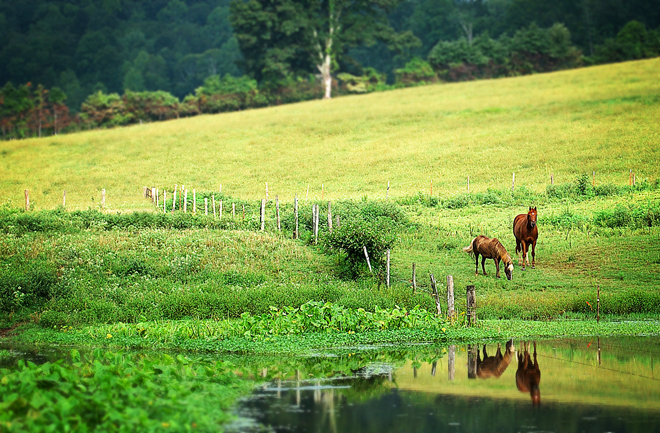
Pasture, Northcutts Cove, Tennessee

Pasture, Northcutts Cove, Tennessee

Another "had to stop" moment on a drive through Northcutts Cove, just off Tennessee's Cumberland Plateau. I saw the horses, the hills and the pond and that was it. Brakes applied.

It took a while to arrive at a composition I was happy with, and also to catch the horses at the right angles. They were wandering about, crossing in front of each other or just plain turned wrong. I wanted them separated slightly and facing somewhat the same direction. Another horse on the other side of the fence had his backside turned toward me the entire time. He got removed from the photo.

This also started as a vertical composition with some roiling clouds overhead. I felt they were a distraction from the serenity of the still pond and reflection of the horses, so I cropped the photo to horizontal.

Sometimes a photo takes a lot of work.

Photograph © 2009 James Jordan.

Tuesday, August 18, 2009

Tennessee barn

Tennessee barn

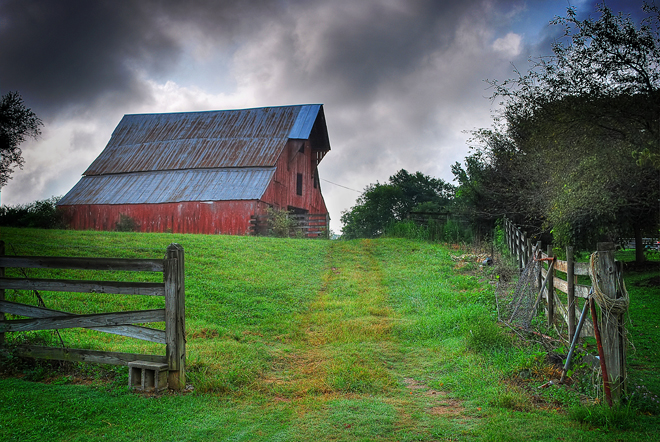
I saw a lot of these in rural central Tennessee -- high gabled barns with one or two "wings" to the side, quite different from the boxy barns located farther north.

This photo was taken in Northcutts Cove, one of the valleys adjacent to the Cumberland Plateau in central Tennessee, on a gray, foggy morning as the sun was steadily making headway into burning off the fog. Lots of low clouds drifting by.

I spotted the barn going by as my wife drove our car through the cove and asked her to stop and back up so I could get a couple of shots. The open gate, path to the entrance of the barn, tranquility on the ground and drama in the sky caught my attention (and oh yeah, the Red Rule), so I caught it right back.

HDR image from a single RAW file processed into five images at 1-stop intervals. Photograph © 2009 James Jordan.

Monday, August 17, 2009

Little house under the starry sky

Little house under the starry sky

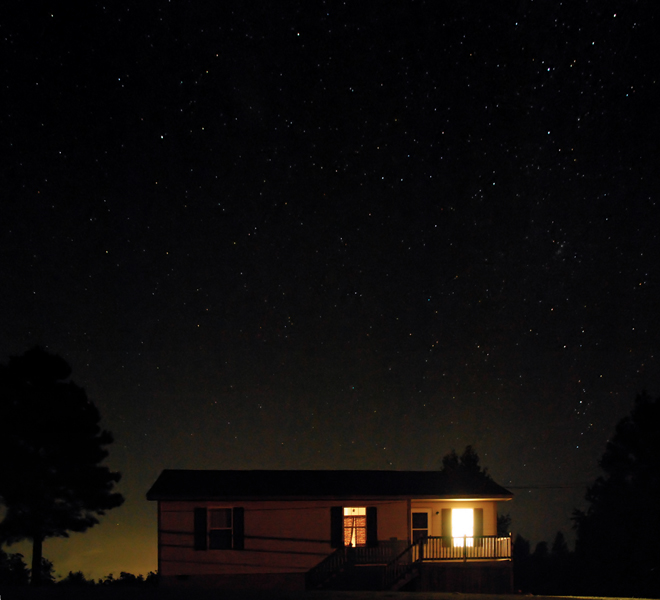
Went to Tennessee last week to deliver some stuff to my newly married daughter that wouldn't fit into their getaway car, see some family, relax a bit and hopefully get a look at the Perseid meteor shower -- something I've wanted to do for many years, but couldn't, either due to schedule, weather or location -- suburban Chicago is not the best place to gaze at the night sky unless you want to see the orangy glow of city lights that stretches for dozens of miles in all directions. I hoped that a location atop the Cumberland Plateau in Tennessee, nearly 1,000 feet higher than the surrounding area and far away from big city lights would make meteor viewing that much better.

The weather nearly added another year to the futility list. The week started off cloudy. The night of peak meteor activity was foggy. Not foggy enough to completely obliterate the starry sky, but foggy enough so that only the brightest meteors could be seen. But I did see them. They ranged from the briefest blips of light to long trails that cut across nearly half of the sky. The fog wreaked havoc with my digital camera, though. None of the photos I took that night were worth keeping.

The next night started off clear, and I hoped to finally capture some streaking meteors. No such luck. The shower was pretty much spent, and while a few meteors showed up, none were bright enough to register on my camera. And fog started to roll in after about an hour of sky watching.

So I settled for this shot -- a little house high atop the Cumberland Plateau, sitting underneath a starry sky. The house itself was lit by a mercury vapor light located a half mile down the road. The glow on the horizon is from the lights of McMinville, Tennessee, about 30 miles away. The points of light in the sky are much farther away.

Photograph © 2009 James Jordan.

Tuesday, August 11, 2009

Somewhere in the middle of Illinois

Somewhere in the middle of Illinois

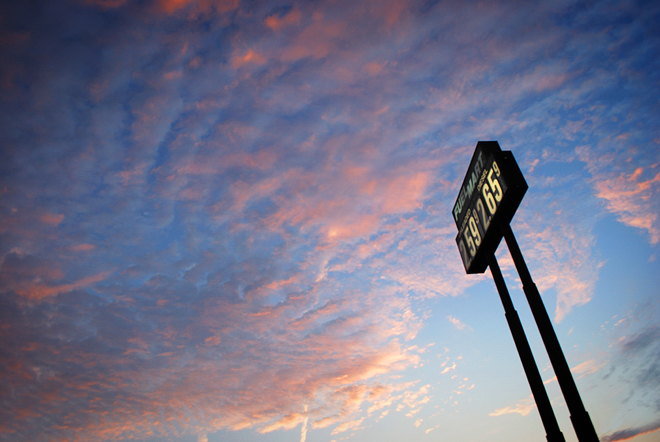
Seen while pumping gas.

Photograph © 2009 James Jordan

Monday, August 10, 2009

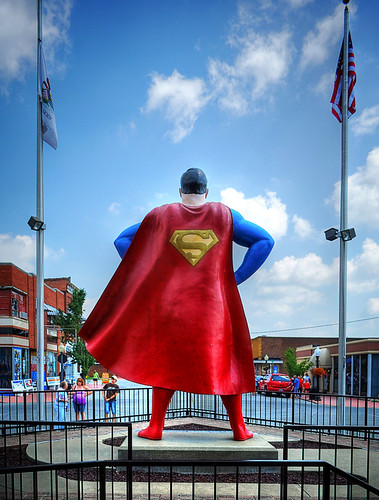
More Smallville than Metropolis

Metropolis, Illinois

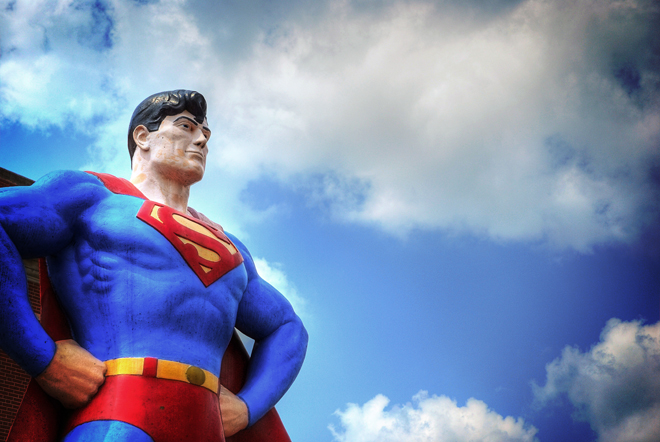
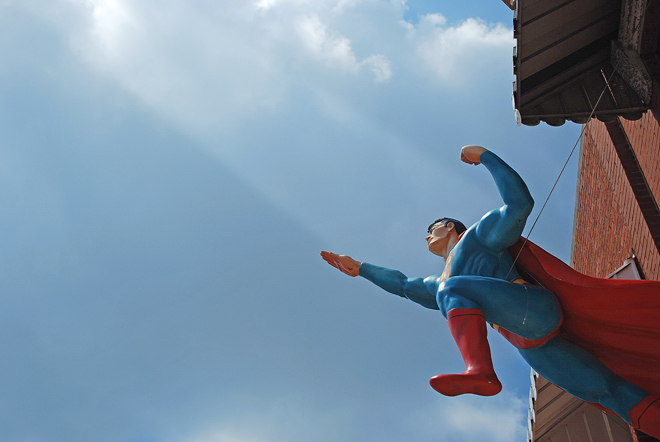
Metropolis, Illinois, a town with a population of about 7,000 has two things going for it. A floating casino on the Ohio River and a name that it can take advantage of. A storied 12-foot-tall statue of Superman stands vigil in the town square. There are more references to the man of steel and super memorabilia than you can throw a chunk of Kryptonite at.

Metropolis, Illinois

Metropolis, Illinois

Metropolis is a three-mile diversion off Interstate 24 heading from Illinois to western Kentucky. I made the diversion recently just to see what was there.

Sporadic posts while traveling. Hope your week is super.

Photographs © 2009 James Jordan.
Friday, August 07, 2009

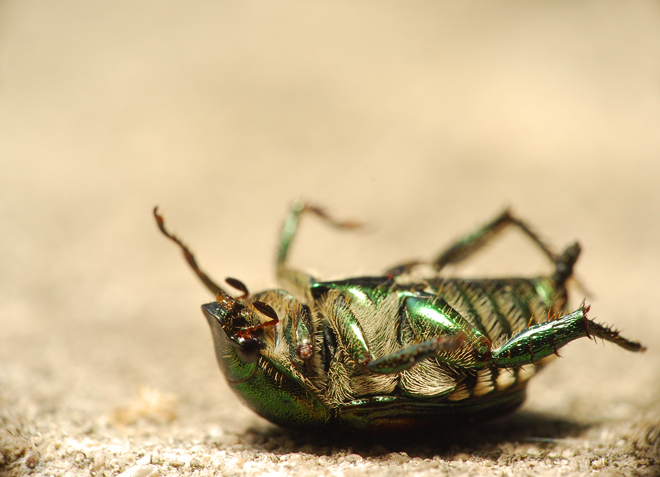
RIP, Japanese beetle

RIP Japanese Beetle

About this time a year ago, I was bemoaning the fact that Japanese beetles were wreaking havoc around my house. I first noticed some brown leaves falling from a large birch tree in my front yard. They all seemed to be skeletonized -- the only portions that remained were the veins, all else had been carefully eaten. A little Googling identified the culprits -- Japanese beetles, which have no natural enemies, therefore giving them free rein to do the two things they do best -- eat like gluttons and make baby beetles.

When a few beetles discover an ideal food source, say, the birch tree in my front yard, an ornamental shrub with reddish leaves, roses or fruit bearing plants, they set up residence and send out pheromones that other beetles can detect up to two miles away. Party's on.

Even more disturbing than the lawn bags full of dead leaves was that as I blew bushels of leaves out of my driveway day after day, I noticed a fine layer of coarse black dirt that blew off along with the leaves. It took me some time to realize that it wasn't dirt -- it was Japanese beetle poop raining from the birch tree.

I posted my situation on this blog last year and got a few good suggestions as to how to keep Japanese beetles at bay this time around. One of them was to dose the tree's roots in the springtime with an insecticide. The idea is that the tree will draw the chemical up from the ground and render its leaves poisonous to insects.

In late May, I poured two gallons of insecticide around the base of the tree as the leaves were just beginning to emerge. Then I waited for the beetles to arrive to see if it worked.

So far, so good. To date, I've only found two leaves with beetle damage that have fallen in my yard, and one of them had a dead beetle attached to it. My birch tree is still lush and green, while two trees across the street have long since turned brown and are losing leaves. Other trees around the subdivision in which I live have suffered a similar fate. Two trees never recovered from last year.

The Japanese beetle above is just one of many that I find in my driveway on a daily basis.

What is it that they say about payback?

Photographs © 2009 James Jordan.