Monday, April 30, 2007

Toy store


Actually it’s Macy’s (formerly Marshall Field and Co.) in Chicago. Rising from the ashes of the great Chicago fire in 1871, Field built a retail giant. The store takes up an entire city block and its buyers travel the world to find merchandise.

I was fortunate enough to join a group of photographers on a walking tour of Chicago’s architectural landmarks while at the North America Photoblogger’s meetup last weekend. Devyn, our group’s tour guide, shared his extensive knowledge of Chicago’s landmarks and took us to some touristy but cool places on which to train our camera lenses.

This was taken from the fifth level of the store into the atrium. A little strategically applied blur helps give the impression that this is a miniature display. But no, it was indeed full size and a long way down when I took the picture.

More on the NAP 2007 meetup can be found here. An NAP group on Flickr has been dedicated to photos of this past weekend.

Sunday, April 29, 2007

Crown Fountain

Youngsters play in the stream of the Crown Fountain in Chicago's Millennium Park. Chicago was the destination for the 2007 North America Photobloggers meetup. The weather proved ideal for a gathering at Cloud Gate and photographic tours of the city. More pics and details about the NAP 2007 meetup to come.

Click on picture to enlarge. Photograph © 2007 James Jordan.

Friday, April 27, 2007

Wishing you smooth roads, blue skies and cheap gas this weekend! (Not sure about that third one – gas prices took a wicked spike here the last day or two).

I’ll be hanging out with the North America Photobloggers as they gather in Chicago this weekend. I look forward to meeting some of the photogs on my blogroll whose tripods I am not worthy to carry. Should be fun.

Have a good one.

Roadster, Santa Fe, NM. Click on picture to enlarge. Photograph © 2007 James Jordan.

Thursday, April 26, 2007

Into the light

As much as we’ve studied light and its characteristics, and as much as we’ve accomplished in harnessing the power of light, there are still things we don’t understand about it. Like, where does it come from and where does it go? Light is still a mystery.

What we see with our eyes is merely an illusion. We can’t see the objects in front of us. What we see is the light that is reflected from those objects. Without light, nothing happens. God’s very first act of creation was to speak light into existence. Pretty basic stuff, light is.

I go around with a little lightproof box capturing these reflected beams of light. They carry the attributes of the objects they’ve just bounced off of and transfers those attributes onto a slim sheet of plastic coated with an emulsion of silver particles. It’s not a whole lot different from a child running around with a jar catching insects. They’ll be examined for a while and maybe the more spectacular specimens will be shown to others to ooh and ahh over.

This blog is my jar. These photos are what I’ve captured. Maybe you’ll ooh or ahh. Maybe you won’t. That’s OK.

I’ll keep running around catching those beams.

Click on picture to enlarge. Photograph © 2007 James Jordan.

Wednesday, April 25, 2007

Back when service stations provided ... service

This vintage Standard Oil service station in Odell, Illinois used to serve up fuel for motorists on old Route 66. Today it serves up memories of a day long past when the pace was a bit slower, an attendant with his name embroidered on his shirt pumped your gas and chatted about the weather while cleaning your windshield and checking your oil. The good ones could time the pumping with the cleaning and oil check to finish at about the same time, then take your money and provide change without you having to leave your car.

Service stations were still doing that when I started driving. Not too long afterward, large filling centers with multiple pumps began to sprout across the country and self-service became the norm. Self-service keeps the overhead low and allows a larger stream of cars to quickly pass through a filling station (it’s just not correct to call them “service” stations anymore). None of that inefficient human contact to slow down the profit machine.

Wouldn’t you know that the day I photographed this station, a man inside noticed me outside and came out to ask me if he could help me. He was the curator of the historical display and gift shop inside the station building. I explained I was there to photograph the building, if it was all right with him. He told me it was fine and to come in if I needed to know anything about the building or the times in which it served the motorists traveling Route 66.

You just don’t get service like that anymore.

Click on picture to enlarge. Photograph © 2007 James Jordan.

Tuesday, April 24, 2007

Paradigms

When I was a boy of about six, my father would give me the assignment of running a couple of blocks to the gas station in our small town to purchase a gallon of fuel for the lawn mower. I would make the trip carrying a red metal gas can and a small handful of change my dad gave me.

At the time, I didn’t think much about the price of a gallon of gas, which was about 30 cents. That’s just the way it was. If you had told me or the gas station attendant that someday the price of gas would be more than ten times that amount, we’d have probably sized you up for a straitjacket. That thought just didn’t fit our paradigm.

Take this old Texaco gas pump for instance. It sits in the town of Dwight, Illinois, at an old service station along old Route 66. The station dates to the early 1930s. The pump was manufactured with only two whole numbers to display the price per gallon. In fact, the price is labeled as “cents per gallon.” Their paradigm didn’t include oil cartels and rapidly fluctuating prices (or at least if it did, they weren't letting us in on it).

We all thought the end of the world was near when the price of gas passed the one dollar mark in the mid-70s, and again when it hit two dollars in the mid-80s. But paradigms are made to be broken.

Four years ago, we hosted a German exchange student in our home. On the way home from the airport, Martina, seeing signs that advertised petrol at about $2.20, remarked that our gasoline was much more expensive than in Germany, where it sold for about $1.30. We later found out that European gas stations advertise a per liter price as opposed to our per gallon price, which made German gas price out at about $5 per gallon.

Makes it all not seem so bad.

Click on picture to enlarge. Photograph © 2007 James Jordan.

Monday, April 23, 2007

Blue Monday

Feeling a little blue this Monday? A lot of people are. Too much to do. Not enough time to do it. Way too many choices and decisions to be made. Did you know that humans really aren’t wired to multitask and anyone who claims to be able to is self-delusional?

If you must remain on the merry-go-round (usually because a paycheck depends on it, and I sure like getting those) at least try these three things:

Manage your energy not your time.
Take breaks.
Simplify.

Good luck. It's easier said than done.

Photo: Beach, Evanston, Illinois. Click on picture to enlarge. Photograph © 2007, James Jordan.

Sunday, April 22, 2007

Water works

The Oracle Fountain at Stratford Square Mall in Bloomingdale, Illinois puts on a show of leaping streams of water. The fountain was designed by WET Design of Los Angeles, most famous for the “leapfrog” fountains at Walt Disney World.

Completed in 1999, the fountain, which is located at center court of the suburban shopping mall, consists of concentric terraced rings with a steel latticework in the center from which the jets of water emanate.

A number of WET’s “water features,” as they are called, grace the Chicagoland area. Several shopping areas are home to these dancing waters, as is Navy Pier, McCormick Place and the Water Tower Place.

Click on picture to enlarge. Photo © 2007 James Jordan.

Friday, April 20, 2007

Different road

"The trouble … is that too many people … live in a box (their home) and then travel the same road every day to another box (their office)."

-Faith Popcorn

Hope you get the chance to get out of your boxes and take a different road this weekend. Have a good one.

Photo: Gravel Road, Amarillo, Texas. Click on picture to enlarge. Photograph © 2007 James Jordan.

Thursday, April 19, 2007

Spring healing

I've resisted the urge over the last several days to make any mention of the tragedy at Virginia Tech. For one thing, there are already millions of blogs adding volumes of commentary on the topic across the blogosphere, and I didn’t think I had that much to add to the burgeoning conversation already going on.

Then Virginia’s comment on yesterday’s post got me to thinking. Someone received a measure of solace from a photograph I posted. I took it two days before the rampage on the VT campus. It shows a cycle of life getting ready to make one more run with the return of warm breezes after the sting of winter has passed.

One young man wouldn’t or couldn’t allow the warm breezes to erase the wintery stings in his tortured life. He chose to make the winter permanent and by his actions imposed the same choice on a large circle of grieving family members and friends across the country. My prayer is that those who mourn will find and receive the healing breezes. But I know that some will choose to hold onto the icy shards of anger, bitterness and hatred, making permanent again the winter that one person attempted to impose on so many, making him the winner in his twisted game.

Photo: Into the Woods, taken near Bloomington, IL. 70mm lens, 5 seconds at f22, 100 ISO. Click on picture to enlarge. Photograph © 2007 James Jordan.

Wednesday, April 18, 2007

Wishful well

Some 80 percent of Illinois’ land surface is farmland. And most of that is given to growing corn and soybeans. I spotted this barn sitting on a high point in a soybean field while photographing near Bloomington last weekend. The structures sat surrounded by the remains of last year's harvest.

The concrete well is testimony to the fact that most of the state is dependent on the weather during the summer growing season. Some farmers have hedged their bets by digging wells to provide some irrigation to their crops during dry spells. The 1930s were dry times in Illinois, as were the 1980s.

On this early spring morning, all seems to be ready for yet another growing season – the land is waiting to be tilled, the well is at the ready should a dry spell threaten the crops, and the barn and wagon set to receive the harvest many months down the road.

This picture can be repeated thousands of times across this state.

Click on picture to enlarge. Photograph © 2007 James Jordan.

Tuesday, April 17, 2007

Can't tax this

I spent quite a bit of time last evening thinking of an appropriate photo to post for Income Tax Day here in the U.S. For those of you who may be unfamiliar with the yearly ritual (either you’re reading this from outside the U.S. or you decided to quit paying income tax twenty years ago), common ordinary citizens untrained in the intricacies of law or accounting are required to navigate through the U.S. Income Tax Code, a volume of laws, regulations and rules several feet in thickness created by lawyers and lifetime bureaucrats, and apply those rules that are pertinent to their situation (income level, family size and age, participating or non-participating business, investment and/or rental income, found money in the sofa cushions, NCAA pool winnings, etc.), report it all to the government, who already knows all this information about you anyway but are just testing your honesty, calculate your tax liability and, based on money withheld from your paychecks over the course of the past year, determine whether you finished in the plus or minus column.

I considered posting my Spring Meme Flower with most of the petals plucked off (a metaphorical depiction of my take on the tax code), but that required way too much time in PhotoShop.

Instead, I decided to post the above photo, taken as day broke east of Bloomington, Illinois last weekend. It’s also metaphorical. It’s a new day, with new opportunities, and the road is there waiting for you to do some exploring.

And unless you find some money along the way, the U.S. government can’t tax that.

Click on picture to enlarge. Photograph © 2007 James Jordan.

Monday, April 16, 2007

My photograph was displayed in a museum in Switzerland and all I got was this fuzzy picture

Several years ago, a few of my photos were published in magazines and regional travel guides. Back then, you needed to request editorial calendars from the publisher, find and/or take photos that fit within the topics on the publishers’ lists, prepare portfolios of slides (making sure you sent high quality duplicates, not the originals), send them to the publisher 100 or so at a time, then wait several months to hear back. If you experienced the average success rate, you would sell one photograph for every hundred or so that you submitted. It was a lot of work to have your photos viewed by the world – and a limited viewing at that.

Digital media has changed all that. Within minutes of uploading a picture to this blog or my account at Flickr, the photo is instantly viewable to the world via the network of links here or by RSS feeds. To date, my photos have received more than 100,000 views.

The Musée de l'Elysée in Lausanne, Switzerland is exploring the impact of digital media in making photography accessible to the world. The museum’s current exhibit, ‘We are all photographers now!’ explores the issues related to millions of daily image uploads to the internet. The museum also offers photographers a chance to participate in the exhibit by uploading photos to their website. Photos are selected and put on display for a day. One of mine was selected and displayed last week. The museum sent the low-res photo, above, as proof. The exhibit runs through May.

You can see a much better version of Moonrise.

Sunday, April 15, 2007

Back from Central Illinois

My wife and I took a trip south to central Illinois over the weekend to help our son settle a couple of matters at college, spent a couple of nights in Bloomington (that’s close to Normal, for those of you who are familiar with the geography there). We then drove back home via old Route 66. It wasn’t crowded. And I have pictures.

This one was taken near sundown on a cold, cloudy evening just east of Bloomington on Highway 150. I passed a grove of trees and lush grass. A small creek meandered through the trees. I pulled a quick u-turn and did some meandering through the trees myself, taking several frames in the fading light.

More trip pictures to come. It sure felt good to get out shooting after nearly a month.

Photo details: 1 second at f11, 100 ISO film. Click on picture to enlarge. Photograph © 2007 James Jordan.

Friday, April 13, 2007

Take it easy

Let the rest of the world rush on by this weekend. Have a good one.

Evening, St. Charles, Illinois. Click on picture to enlarge. Photograph © 2007 James Jordan.

Thursday, April 12, 2007

We interrupt our regularly scheduled spring to present this rerun of winter

Just when we think we’re in charge of our destinies, just when our plans are set and we’re feeling pretty high and mighty, the weather puts us in our place and again proves to us just how powerless we really are in the grand scheme of things.

Spring was perking along, albeit a little colder than usual here. Then yesterday happened, along with four to six inches of wet, gloppy snow. Travel by car made treacherous. More than 500 flights delayed at O’Hare with long backups still expected today. Parking lots plugged up because snow plowing contracts only ran through the end of March. Baseball games snowed and colded out.

Unpredictability is the only predictable thing. We can only try to stack the deck in our favor should the unpredictable occur.

Hoping you have a predictable day today.

Click on picture to enlarge. Photograph © 2007 James Jordan.

Wednesday, April 11, 2007

Spring delayed on account of global warming

Snow fell here last night and this morning. Lots of snow. Drive slow, get to work late, cars in the ditch kind of snow. Temps have been below normal all month and will continue for the foreseeable future.

There's global warming out there. It's in the papers and on the internet. It just hasn't seemed to hit here yet.

Happy spring, everyone.

Click on picture to enlarge. Photograph © 2007 James Jordan.

Tuesday, April 10, 2007

Feeling wrecked of late

If it's not the weather, it's been my schedule that has kept me from getting out to do some shooting of late. In desperation, I took some photos of my cat last weekend (Alas! It's come to that!). At least she has an interesting story to go along with her photo in yesterday's post.

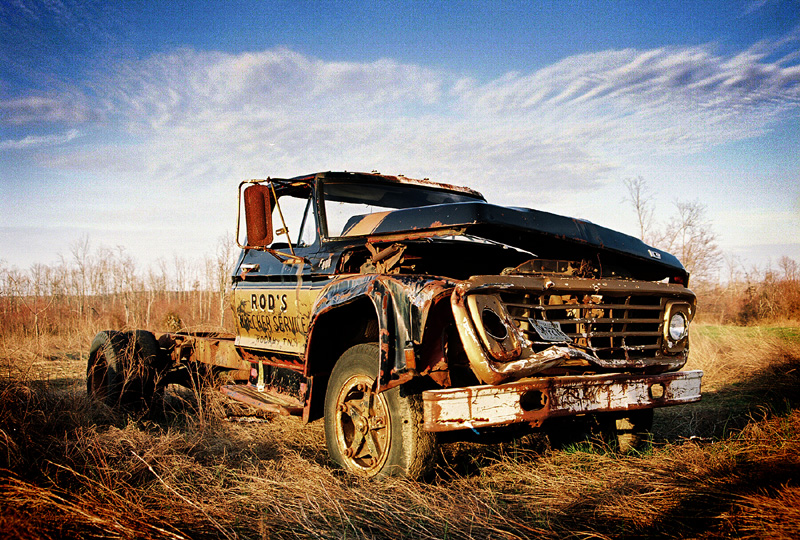
Here's the other tried and true solution to a dearth of new photos: the retrospective. A year ago, I came across this wrecker truck that found itself wrecked on top of the Cumberland Plateau in central Tennessee. The folks there have an efficient way of dealing with stuff that's lost its usefulness - leave it where it died. Makes life a lot simpler, and besides, it's nature's way, right? This truck is even returning to the earth, one rusty molecule at a time.

For what it's worth: Points of Light has garnered a nomination at the Blogger's Choice Awards. Although I do have to admit I'd never heard of it until I noticed a referral in my site tracker software. I followed the link and discovered the nomination. Soooo ... if you find it within yourself to cast a vote for this blog, please click the image below to go there (you will be asked to create a login, but hey, who doesn't already have more logins than they can use, right?).


Click on picture to enlarge. Photograph © 2007 James Jordan.

Sunday, April 08, 2007

Me-ow ... nothing more than me-ow ...

Meet Poly. No, it’s not a misspelling. Poly is short for “polyphonic,” a musical term applied to this cat by my youngest son, now a master’s student in Jazz Studies at the University of Illinois.

Poly was a stray that showed up on our doorstep six years ago, bedraggled and beaten up. We took her to the vet, fixed her up (in more ways than one) and took her in. Poly earned her sobriquet through her unique two-toned meow. Poly would meow in high/low perfect fifths in the key of A (think of the first two notes in the song, “Feelings”).

Life in the wilds of suburban Chicago made Poly nervous and reactive to noises and motion. But the ensuing years have been good to her, and Poly has relaxed and mellowed. Poly would never have stuck around for photo sessions back then. But she put up with me today, happily ignoring me as only a cat can.

Click on picture to enlarge. Photograph © 2007 James Jordan.

Why seek the living among the dead?

He is not here. He has risen.

More thoughts that I posted last year on Resurrection Morning.

Click on picture to enlarge. Photograph © 2007 James Jordan.

Friday, April 06, 2007

Seeking a sign

Jeff, the Weak-Minded Pessimist (although I’d categorize his mind as anything but weak) likes to poke fun at those people who go gaga over vague images of Jesus and the Virgin Mary on everything from tortillas and grilled cheese sandwiches to tree bark and aqueducts in Chicago. Then there are those who have themselves crucified on Good Friday. Well, okay, a lot of people poke fun.

More than anything, people are hungry for a sign that validates their belief. Jesus even knew in advance that this would happen. He told some people who asked Him for a teensy miracle (to prove who He said He was) that their entire generation wanted to see signs. Jesus said they only needed one – that three days after dying, He would come back to life.

This is the weekend we commemorate and celebrate that definitive sign. No need for self-destruction or waiting for the perfect piece of toast to appear on eBay.

So why did I choose to post the photo of a waterfall in Starved Rock State Park in central Illinois on Good Friday? Take a look at the base of the falls. The water fell in a perfect pattern to form the head and shoulders of a man.

Those of you who need a little sign – go for it.

Click on picture to enlarge. Photograph © 2007 James Jordan.

Thursday, April 05, 2007

Eye

How vast and ancient
This dragon must be, that it
Takes a month to blink!

Haiku by Nick Walker
© Nicky Kaa Walker

Photo made with 210mm lens, 30 seconds at f16, 100 ISO, blended with an exposure of 1/125 at f16. Orton effect added in post-processing. Click on picture to enlarge. Photograph © 2007 James Jordan.

Wednesday, April 04, 2007

A full moon by any other name

You know the Harvest Moon and perhaps even the Hunter’s Moon, not to mention the occasional Blue Moon. Meet the Worm Moon, which I photographed from my backyard on Monday night. (By the way, tips for shooting moon photos are posted on my photo advice blog. See if you can figure out how I shot this photo.)

Each full moon has a name dating back to northern Native American tribes who kept track of the seasons by giving each full moon a distinctive name. The Worm Moon got its name by the fact that by this time of year, the ground is softening after the winter freeze and worms begin to emerge.

Here are the other names, listed in the month they generally occur (since the moon’s cycle is slightly less than a calendar month, the moons may change months from year to year):

January: Wolf Moon. Wolf packs howled hungrily under this moon in the dead of winter.
February: Snow Moon. To mark the month of heaviest snowfall.
March: Worm Moon. Explained above.
April: Egg Moon. Birds return from the south to mate.
May: Flower Moon. For obvious reasons.
June: Strawberry Moon. Marked the ripening of the strawberry harvest.
July: Buck Moon. Antlers of young bucks begin to appear.
August: Sturgeon Moon. The month when these fish were most readily caught.
September: Harvest Moon. Provides light for farmers to work late gathering their crops.
October: Hunter’s Moon. Time to hunt – fields are cleared, leaves have fallen, game is fattened.
November: Beaver Moon. Time to set traps for winter fur.
December: Cold Moon. Winter’s coming.

Spring Meme update: I gave away some virtual flowers in honor of spring a couple of weeks ago. Flowers sprouted all over the world. Heipet from Germany took me up on the offer and went one better. She has a lens at Squidoo where she has turned the Spring Meme into a blog party. Check out how you can get involved.

Below are my contributions to the online musings of the season:

DC in Bloom at Sugar, Spice and Sometimes Nice:
Thankfully, I was able to leave work last night in time to take a walk around the Tidal Basin to see the cherry blossoms. I was rewarded with beautiful weather and beautiful sights. Read and see more.

If Dog Poo Turned Into Flowers … at Pug Possessed
Lamenting a late spring in the far north. Read more.

Flowers, Buldozers and Other Signs of Spring at WSJ blog
Does a would-be poet lurk in the P.R. department at the Federal Highway Administration? Read more.

Click on picture to enlarge. Photograph © 2006 James Jordan.

Tuesday, April 03, 2007

Monopolistic irony

One of the most popular board games in history was the result of open source development, not the creation of one individual.

Charles Darrow was unemployed during the Great Depression, but he had a dream. Darrow developed a board game in which people bought property, built houses and hotels and collected rent and salary. He developed the game in his kitchen in Philadelphia. Darrow eventually made millions from the game called Monopoly – an example of all that is possible in America.

The only problem is this story is not true. Well, the part about living in Philadelphia and making millions is true. Everything else is a fabrication. On August 26, 1982 the U.S. Circuit of Appeals in San Francisco ruled that the "reference to Darrow as the inventor or creator of the game is clearly erroneous," destroying a myth and revealing a 47-year cover up of the truth by Parker Brothers.

Then who created Monopoly?

US patent No. 748,626 was granted on January 5, 1904 for a game called The Landlord’s Game. It’s inventor was a Maryland woman named Lizzie Magie, who created her game 30 years before Darrow supposedly thought his up.

Magie’s game diagram included corner spaces with "Jail" and "Go to Jail" in opposite positions; four railroads, one in the middle of each row; a water works and electric company in the same places, and the ascending value of rents and property values running clockwise around the board. The properties had no names, nor did the game include Chance or Community Chest cards.

Lizzie made some copies of her game, and dozens of people in the mid-Atlantic states, played, enjoyed and modified the game in the following years. When Magie's small supply of boards was used up, people began drawing their own, giving names to the streets and using thimbles and buttons for markers and altering the rules as they played. In effect, Monopoly was the result of open-source development, not the creation of one person.

In 1929, Ruth Hoskins, who had learned the game in Indiana from her brother, who learned it at college, taught it to her acquaintances in New Jersey, mostly couples from Atlantic City and Philadelphia. These players decided to give the properties familiar local names, like Boardwalk, Vermont, Oriental and Marven Gardens, which was later misspelled as Marvin Gardens. They also added the Community Chest, the $200 salary for passing "Go" and the "Get Out of Jail Free" cards.

About a year later, members of Hoskins’ game circle taught the game and gave some game equipment to Charles Darrow who almost immediately began commercial production of the game. Until then, the game was shared and given away. Darrow eventually sold the game to Parker Brothers with the claim of being its sole inventor.

None of the people who played Monopoly previously were interested in trying to sell the game, even though almost everyone who learned to play it became fascinated with it. "We weren't business people," Hoskins said 40 years later. "We were schoolteachers. It was a good game the way it was." It was a point of honor among early devotees not to think of commercializing it.

Parker Brothers is alleged to have bought up all the early Monopoly sets that it could find and paid Magie $500 for the rights to her Landlord's Game. The company began officially saying that Darrow was the inventor of Monopoly.

But the truth is no one person invented Monopoly. Lizzie Magie started it, but the game evolved from the playing and tinkering by hundreds of people over three decades. Its open source beginnings exquisitely captured the commercial spirit of the American culture, perhaps in a way that no individual possibly could.

Source: Philadelphia Inquirer, September 20, 1982

Click on picture to enlarge. Photograph © 2007 James Jordan.

Sunday, April 01, 2007

Everything I know about Life I learned from Milton Bradley

Things I learned from Milton Bradley's The Game of Life:

  • Life is a journey.
  • A long journey.
  • An education is the key to a good job.
  • Nobody wants to be a journalist.
  • Decisions made early in the game will either help you or haunt you later.
  • The person you start with in your car is the person you will end with.
  • But why is it that your kids never get out of your car and start their own game?
  • Always buy stock.
  • When you bet on the wheel, you have a 90 percent chance of not winning.
  • That seldom stops anyone from trying it anyway.
  • Especially those losing the game.
  • Pay your debts. A day of reckoning is coming.

The facts of LIFE: Milton Bradley was a lithographer in Springfield, Massachusetts in the early 1800s. Bradley's business was on the decline when a friend whom he was visiting challenged Bradley to a game. It was most likely a game imported from Europe that employed a spinner to determine the number of spaces a player moved.


The experience inspired Bradley to invent, publish and sell a game of his own. Bradley designed a board game called The Checkered Game of Life. The object was to obtain a happy old age instead of financial ruin and a player's luck was decided by a numbered spinner. Players moved game pieces over sixty-four squares, which could be good, bad, or neutral according to their color.


By 1861, Bradley had sold more than 45,000 copies of his game. He formed Milton Bradley and Company in 1864 to print other games and game manuals. The Checkered Game of Life eventually was retired to the archives.


Fast forward to 1959, Milton Bradley executives asked freelance toy and game inventor, Reuben Klamer, to come up with a game for the 100th anniversary of the company. Inspired by a Checkered Game of Life game board he saw in the Milton Bradley archives, Klamer and a co-inventor developed THE GAME OF LIFE that was introduced in 1960.


Click on picture to enlarge. Photograph © 2007 James Jordan. The GAME OF LIFE game board and pieces © 1985 Milton Bradley and Company.

Friday, March 30, 2007

Optimism

There's always so much optimism at the beginning of a road trip. Kind of like a weekend.

Hope yours is a great one.

Ile d'Orleans, Quebec, Canada. Click on picture to enlarge. Photograph © 2007 James Jordan.

Thursday, March 29, 2007

That blue stuff is called 'sky'

Some folks have mentioned to me that they “don’t get” the Cloud Gate sculpture (aka “The Bean”) in Chicago’s Millennium Park. And frankly, I didn’t for a while myself, until I made a few visits to see my daughter who attends college downtown (or as the folks in the UK call it, “Uni.”).

When I’m in Chicago, I’m a gawker. I look at the buildings and take in all the variety and nuances of the architecture. I ponder the thin ribbon of sky beyond the tops of surrounding buildings. I’m well aware that the gawking sets me apart immediately as an interloper, and identifies me as an easy mark for the homeless guys seeking handouts, but oh well. Just about every native Chicagoan walks about with a level gaze. They all have somewhere to go and fast. They’ve seen the buildings. They’re jaded. I’ve even noticed it in my daughter after seven months of city residency. She walks like a native now and pokes fun at my “Gosh, would you look at that” approach to the city.

What artist Anish Kapoor wanted to do was to grab that thin slice of sky, enlarge it, reduce the buildings and place it all within the ground level field of view of Chicago’s population. Here’s what you’ve been missing, people. In the artist’s words:


What I wanted to do in Millennium Park is make something that would engage the Chicago skyline … so that one will see the clouds kind of floating in, with those very tall buildings reflected in the work. And then, since it is in the form of a gate, the participant, the viewer, will be able to enter into this very deep chamber that does, in a way, the same thing to one's reflection as the exterior of the piece is doing to the reflection of the city around.

Works for me.

And it will probably work for the North America Photobloggers, who will meet at "The Bean" at 11:00 a.m. on April 28. Some of my favorite photographers will be there. Can't wait to meet them.

Click on picture to enlarge. Photograph © 2007 James Jordan.

Wednesday, March 28, 2007

Antithesis

My photo posts this week have admittedly been on the negative side, and this one is no exception. It is of an approaching storm passing over a barn. It’s the original image on the color negative film I used to take the photo. In this image is all of the information needed to produce a positive image of the same scene.

We live in a world of opposites. Good and evil, positive and negative, yin and yang, thesis and antithesis. The experience is so common that we don’t even think about it much. We’re used to it. We expect it. We plan around it, mostly in an attempt to stack the deck in favor of the positive and minimizing the negative.

There’s wisdom to be gained in the negative. I can look back over those moments when it seemed the picture was turned the wrong way. It’s helped me see the positive more clearly.

Click on picture to enlarge. Photograph © 2007 James Jordan.

Tuesday, March 27, 2007

Avenging angel

Some more inversion experimentation in Photoshop. You don't want to find yourself on the bad side of an angel.

Click on picture to enlarge. Photograph © 2007 James Jordan.

Monday, March 26, 2007

Fire in the sky

I did a little experimenting with inverting some of my archive photos to see what would happen. This photograph of a church steeple in Cleveland, Wisconsin was originally a placid scene with a bright blue sky and fleecy clouds. Inverted, it became a scene of the apocalypse.

I didn't get the chance to do any photographing this weekend, in spite of record high temperatures here, so I'll be posting more experimental/archive photos this week. Stay tuned.

And Happy Monday. By the way, here's the original church steeple photo.

Click on picture to enlarge and feel the heat. Photograph © 2007 James Jordan.

Friday, March 23, 2007

Twists of life

Hoping that the twists and turns go your way this weekend.

Have a great one.

Photo: Highway 42, Door County, Wisconsin. Click on picture to enlarge. Photograph © 2007 James Jordan.

Thursday, March 22, 2007

A flower for you!

I’m giving away virtual flowers this week in honor of the vernal equinox on Wednesday. You can have a “Think Spring” flower to post on your blog this week … just copy the HTML code below and paste it into a blog post to display the large size picture above (Do not alter or edit the code):

Want something smaller for your sidebar? Copy and paste this HTML code into your blog template (Do not alter or edit the code):

Instruct your blog readers to click your “Think Spring” picture to get their own HTML code and keep the virtual flower-giving going. Let’s see how far we can spread this "spirit of spring" meme!

By the way, I’ve got wallpapers to give, too:

Download a 1024x768 wallpaper
Download an 800x600 wallpaper

Happy vernal equinox!

Mum photograph © 2007 James Jordan. HTML code and wallpaper downloads may be freely copied and distributed.

Blooming and booming

These are bunchberries, a relative of the dogwood. I photographed them at Grand Portage State Park located on Minnesota’s Lake Superior shore. According to some sites I Googled, they get their name from the cluster of berries each flower produces. The only problem is the flowers don't always produce the aforementioned berries. It seems the pollen sacs in each blossom explode when touched, which tends to discourage bees from returning to finish the pollination task. Fortunately for the plant, it also reproduces by sending out runners.

I had no problem distributing free flowers this week. And the results were pretty explosive in their own way. Thanks to all of you who took me up on the offer and posted a bloom on your blog. The flowers have turned up all over the U.S. and have traveled as far as the UK, Mexico and Singapore.

Thanks a bunch.

Click on picture to enlarge. Photograph © 2007 James Jordan.

Wednesday, March 21, 2007

Happy first day of spring

The sun rose at due east today and will set at due west tonight. The weather here in the upper midwestern U.S. will be going back and forth for the next month or so, but we're definitely makin' progress.

Photo: Sunrise, Baileys Harbor, Wisconsin. 1/30 at f16, ISO 100 Fuji Reala film, graduated neutral density filter. Click on picture to enlarge. Photograph © 2007 James Jordan.

Tuesday, March 20, 2007

Pot of gold

Yeah, I know it's more accurately "vase of gold," but the other title seemed more interesting to me. If you have a digital point and shoot camera with a closeup setting, a tripod, a window, a sheet of colored paper, a piece of white poster board, and a vase full of flowers, you too can take a photo much like this. The instructions for the set up is posted on my photo advice blog. Just replace the vase of flowers for the old camera in the illustration.

For you detail junkies out there - this photo was taken with a Kodak Easy Share C633 set for closeup. Set at ISO 80, center-weighted focus, flash off and used self-timer set at 2 seconds. Minimal levels adjustment and color saturation performed in PhotoShop, along with some blurring and vignetting for effect.

I keep amazing myself with what those little cameras are capable of.

Oh, and don't forget to take your free flower in honor of spring.

Click on picture to enlarge. Photograph © 2007 James Jordan.

Sunday, March 18, 2007

Requiem

This is a photograph of a life well lived. This old uprooted tree lies in Sunset Crater, the floor of an extinct volcano near Flagstaff, Arizona. The land is coarse and rocky, and the gnarled roots of this tree twisted and turned in search of elusive moisture. While quite a number of poplar and pine trees dot the landscape, not many large trees survive in the rugged pumice-and-cinder landscape. A few manage to grow to a large size, providing refuge for animals and insects. Look closely and you can see the tunnels created by wood-burrowing insects.

As happened to nearly all the large trees here, this one became a victim of its own success. It eventually outgrew the available water supply and began the slow process of dying. Whether it died before the high desert wind overpowered its tentative grip on the unstable soil is uncertain. In the distance stands another pine that faces an identical future.

But they made the best of the situation they found themselves in. We should be so resilient.

Click on picture to enlarge. Photograph © 2007 James Jordan.

Friday, March 16, 2007

The Road

Wherever the road takes you may it ultimately lead you home.

Have a good weekend.

Click on picture to enlarge. Photograph © 2007 James Jordan.

Thursday, March 15, 2007

Smoky Mountain high (very high)

I'm not a fan of high places. Well, I love the view from a high place, it's just getting there that unnerves me. You're talking about someone here who can get woozy taking an escalator. Climb up on my roof to make some repairs? Fuggedaboutit! I love lighthouses and I've climbed a few light towers that allow visitors to do so, and every time, about halfway up, my brain starts arguing with itself:

"Hey, there's a window."

"Don't look! It'll show you how high you're getting!"

"Isn't that the point?"

"Let's just wait until you get to the top."

"Are you crazy? Don't you know you can lose your balance and fall to your death from the top?"

"Don't bother me with that now, if I let go of the stair rail, I'll tumble backwards and break my neck long before that happens!"

"Then why don't you just turn around and go back down?"

"And let those kids that ran up the stairs ahead of me show me up? Wait, I'll consider it. (Peers down the center column of the spiral stairway to the floor way, way below.) Naw, that might kill me, too. May as well keep going. I'll worry about the return trip later."

"Have it your way, chicken."

I took this photo while standing on a 50-foot observation tower on top of 6,600 foot-tall Clingman's Dome in the Great Smoky Mountains National Park. It took a drive along a scenic mountain road with plenty of safety rails and a half-mile walk up a wide paved trail and a spiral ramp with high, thick walls and to get to this vantage point. It was as if it were designed just for me.

No internal arguing this evening. Just plenty of time to set up and shoot.

Click on picture to enlarge. Photograph © 2007 James Jordan.

Wednesday, March 14, 2007

Night station

This is a commuter rail station in my home town of Elgin, Illinois. It's the final stop on a line outbound from the city of Chicago. At one time this station consisted of a basic roof over a set of benches. The station underwent a renovation four years ago which resulted in a charming depot structure.

This was an early attempt at night photography, taken last July. As I recall, this was a two-minute exposure, which rendered the drifting clouds as ghostly streaks across the twilight sky. The camera sat on a tripod set about a foot and a half off the ground in between a set of rails - it was a weekend and the schedule didn't call for any trains interrupting my shot or my life.

Click on picture to enlarge. Photograph © 2007 James Jordan.

Tuesday, March 13, 2007

Night beacons

On the evening of January 24, 1870, keeper William Jackson displayed the light at the Cana Island lighthouse in Door County, Wisconsin for the first time. Situated on a rocky spit of land on the western shore of Lake Michigan, the lighthouse has stood in portions of three centuries guiding mariners around the rocky shoals submerged nearby.

After the light was automated in 1945, with no keeper to provide the constant attention needed in the harsh northern climate, the station fell into deterioration. In the 1970s, the Door County Maritime Museum leased the lighthouse property with the intention of preserving an important piece of Door County history.

The Third Order Fresnel lens still casts its light eighteen miles into the darkness every evening.

I’m going to be posting archive photos for a bit until I can get out and get a supply of new photos. This photo was taken about three years ago on a clear evening about 45 minutes after sunset. At the time I was just making the transition from photographing lighthouses during the day to catching them in the evening (after all, that’s the entire point of lighthouses, isn’t it?). Despite its picturesque location, Cana Island had up until then been a difficult lighthouse for me to capture to my satisfaction. This particular evening, everything came together just right – weather, time of day, position of sun and moon.

Click on picture to enlarge. Photograph © 2007 James Jordan.

Monday, March 12, 2007

Deposed depot

This is the Chicago and Northwestern Railway depot in Dekalb, Illinois. The photo was taken shortly after sunset as a freight train passed by. The long exposure rendered the passing rail cars as semi-transparent.

The railroad depot once served as the social and commercial hub of many small towns across the country. Goods, grain, mail and people arrived and departed by way of the steel rails that passed through town.

The increase in the number of automobiles and highways after World War II sparked a decline in rail travel, and tens of thousands of these buildings, many of them a showcase of architecture, fell to neglect, vandalism and the wrecking ball. Only about half of the estimated 40,000 depot buildings that once dotted the country remain, more casualties in the quest for progress.

Click on picture to enlarge. Photograph © 2007 James Jordan.

Sunday, March 11, 2007

Reaching

If you’ve visited this blog for any length of time (there are a number of you, you know who you are and I appreciate you very much), you’ll know I have an affinity for “lonely tree” photographs – a picture showing a single tree within a landscape. They’re not easy to come by. First, you have to find one all by itself, then hope that time of day, location and weather coordinate to allow a compelling composition.

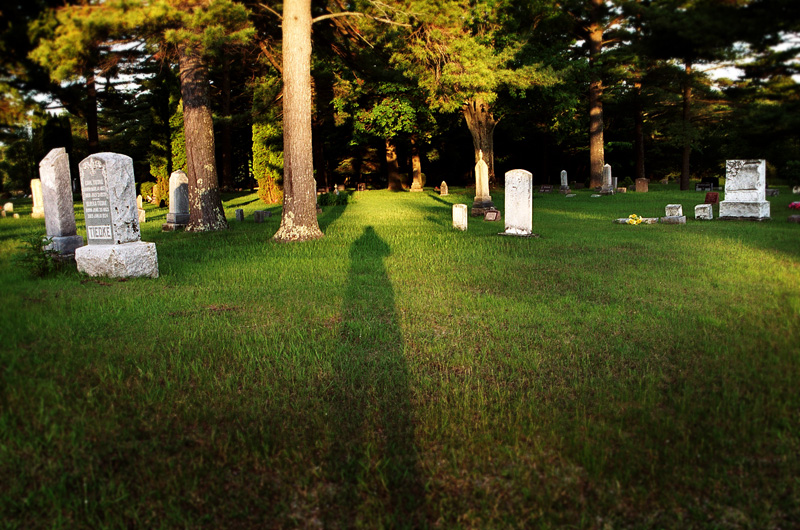
I passed St. Mary’s Cemetery while driving through Dekalb, Illinois last evening as the sun was setting. This single tree stood at its center, keeping watch over ancient headstones and monuments. Its branches reached toward heaven, as if on behalf of the souls lying beneath it – a single link between earth and the realms beyond.

The Bible often refers to the cross of Jesus Christ as a tree, and the imagery of a tree as an instrument of both salvation and judgment flows through its pages.

Every so often, I get a visual reminder.

Click on picture to enlarge. Photograph © 2007 James Jordan.

Friday, March 09, 2007

A walk in the woods

Warm winds are coming into northern Illinois this weekend. We'll be seeing 50s and saying goodbye to the snow on the ground. Won't be too long before we'll see something that resembles this photo. I plan to get out and get some pictures and otherwise take it easy.

Have a great weekend.

Only 12 days until spring.

Click on picture to enlarge. Photograph © 2007 James Jordan.

Thursday, March 08, 2007

Winter's day

Winter's day ...
Memories of what once was.
Don't stop there ...
Hope for what is to come.

Photograph © 2007 James Jordan.

Wednesday, March 07, 2007

Old but beautiful

George Eastman made it his life’s work to put photography into the hands of the general public. His slogan was, “You press the button, we do the rest.” It would be fair to say that he succeeded. It seemed fitting that this Kodak 3A Folding Brownie, called the Model A, would have its picture taken nearly a century after its creation with a Kodak Easy Share C633 digital point-and-shoot. As they say, you’ve come a long way.

These folding box cameras had a relatively short production run from 1909 to 1915. Knowing the serial number of this camera and the total quantity manufactured, I’m guessing this camera dates to about 1910-11. The bellows came in either red or black. As far as I can tell, it’s still operational. The mechanical parts work smoothly - you can hear and feel the carefully engineered shutter works do their thing when you press the release. The bellows are in good shape and have no light leaks. The lens is clean.

Hmmmm.

George Eastman pioneered roll film, making it faster and easier to take and process photos. The Model A used what was called 122 roll film, quite a bit wider than today’s 120 film. It produced an image 3 ½ inches by 5 inches in size. Contact prints were made from the negatives.

This camera was given to me by my wife’s father about 20 years ago, who no doubt, received it from his father. He also gave me a 1930s vintage Foth Derby II, the lens of which is pictured in my previous post. I had only a passing interest in photography at the time I received these items, and I put the cameras into storage. Fast forward 20 years. I remembered the cameras while testing out the macro capabilities of the C633 and took some photos of them. A little research on the Internet helped me understand exactly what I had in my possession, and I discovered that a company in New York makes and processes custom rolls of film for both cameras.

Hmmmm.

Click on picture to enlarge. Photograph © 2007 James Jordan.

Oh, by the way ... if you're interested, I described the simple setup for photographing still life subjects like this one on my photo advice blog.

50,000th visitor comes forward!

Congratulations to Roger, who left a comment after discovering the number 50,000 on my visitor counter. Roger wins a print of "Moonrise at Cave Point," the first print in my series "Door After Dark," photographs of Door County Wisconsin by moonlight.

Technically, according to my stat tracker, Roger is visitor number 50,001. A person from the Netherlands actually beat Roger by six seconds. I'm guessing that the page loaded faster for Roger, giving him the page with the counter at 50,000. Them's the breaks.

Thanks to everyone who helped this blog reach a milestone that seemed 50,000 miles away when I began it some 20 months ago. I appreciate all of you.

Tuesday, March 06, 2007

Are you visitor number 50,000? Check the counter at the bottom of the sidebar. If it says 50,000 you're it and you get a prize from me! Details here.

Monday, March 05, 2007

Old meets new

There is a lot of irony in this photograph. It is the lens of an antique film camera, given to me by my wife’s father, taken with a digital point-and-shoot. Old meets new, or is it the other way around?

I was putting a Kodak Easy Share C633 through its paces, to see what I could get out of it and impressed myself. I’ve posted a description of the photo setup on my photo advice blog.

This old camera came from a day when all cameras were manual. You can’t get more analog than this baby. Everything is mechanical and every setting must be carefully considered, measured and adjusted before committing to opening the shutter.

By contrast, a press of the 633’s button set in motion an instant array of electronic operations resulting in the image you see above. About the only thing the two cameras have in common is a lens and a shutter button.

Oh, yes. And a human being using it to capture a vision.

Click on picture to enlarge. Photograph © 2007 James Jordan.

Sunday, March 04, 2007

Inbound rail

RAILROAD, n. The chief of many mechanical devices enabling us to get away from where we are to where we are no better off. For this purpose the railroad is held in highest favor by the optimist, for it permits him to make the transit with great expedition.
- Ambrose Bierce

“…Wherever you go you are burdened with yourself. Wherever you go, there you are."
- Thomas Kempis, Imitation of Christ, ca. A.D. 1440

Friday, March 02, 2007

Really? Everything?

That's a pretty big boast on the sign at the entrance of the Freeman Kame Preserve where I took some pictures last weekend, but I have to take the state of Illinois at its word.

So I made sure the background of this picture included the protected path lined with protected trees and protected dead grass. I also made sure not to disturb the protected footprints and protected dog droppings on the path as I explored the protected woods and protected railroad tracks nearby.

As I framed up this picture of this well protected place, you'll notice that some protected snow began to fall. I never felt so secure in my life.

Thanks, Illinois.

Click on picture to enlarge. Don't worry it's protected. Photograph © 2007 James Jordan.

Are you visitor number 50,000?
Check the hit counter at the bottom of the sidebar. If it says 50,000, you're it, and you win a prize. Details here.